


Court flags “high-magnitude discrepancy” in disability assessments; multiple agencies now examining the case
New Delhi: A petition before the Delhi High Court has brought to light serious doubts regarding disability certification norms and the credibility of recruitment processes for civil services. The issue involves Shubham Agarwal, selected through the PwBD quota in UPPSC-2019 and UPSC CSE-2024.
The core allegation is that the candidate availed the PwBD quota on the basis of manipulated or fabricated disability certificates, even as leading national hospitals repeatedly found him ineligible under the benchmark disability norms. After the issue came to the notice of the Delhi High Court, the matter has now reached central and state authorities as well as vigilance agencies.
A Division Bench of Justice Navin Chawla and Justice Madhu Jain have passed a significant order in light of the serious inconsistencies in the disability assessments of Shubham Agarwal, who secured a PwBD seat in UPSC CSE-2024. The Bench has directed the constitution of a joint super specialist medical board comprising specialist doctors from GTB Hospital, CGHS and Deen Dayal Hospital to conduct a fresh assessment and arrive at a final determination on the candidate’s actual disability status.
Shubham Agarwal had approached the High Court challenging a direction of the Central Administrative Tribunal (CAT). CAT had, relying on an appellate board report, granted him conditional permission to commence training, but simultaneously directed a third round of medical examination.
Court: 1% vs 67.84% is a “high-magnitude discrepancy”
The Bench observed that the case does not involve a routine difference of medical opinion but a “high-magnitude discrepancy.” AIIMS assessed his disability at 1% repeatedly since 2017, whereas the appellate board recorded 67.84% for the first time in 2025. Previous certificates submitted by the candidate claimed 40% and 44% disability. Citing these stark differences, the Court upheld the CAT order and cleared the way for a joint-board reassessment.
Different institutions, different outcomes: 0%, 1%, 8.64%, 40%, 44% and 67.84%
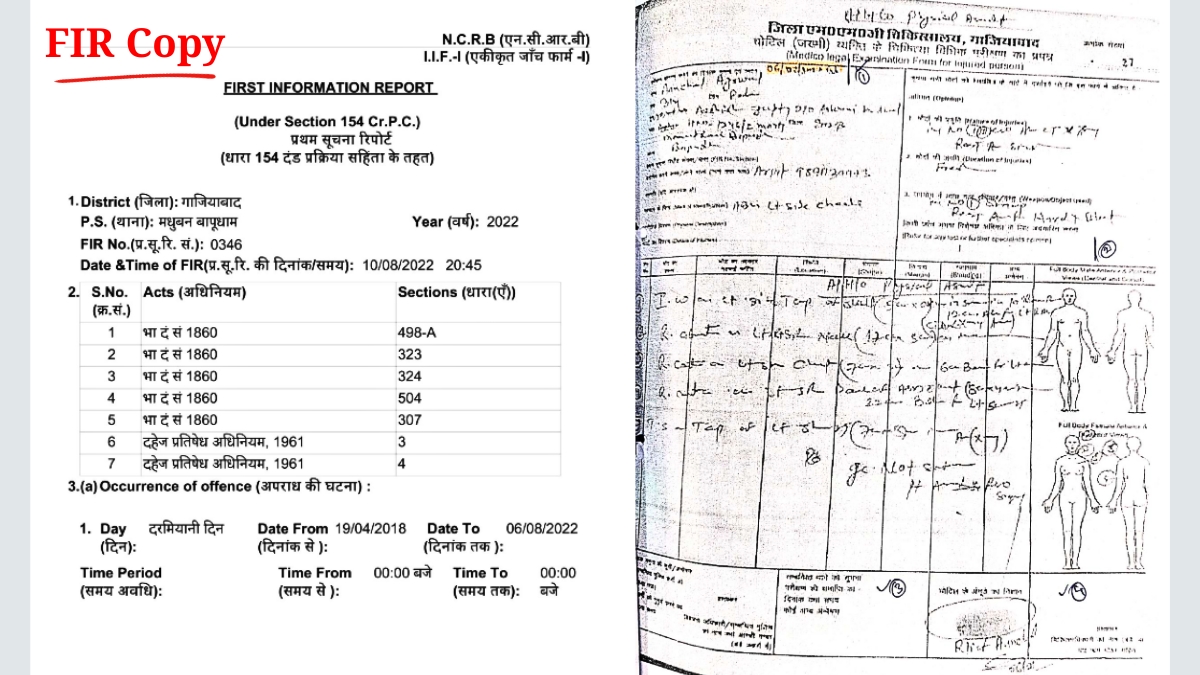
Certificates issued by Ghaziabad and Meerut authorities declared Agarwal 40% disabled. However, at UPSC’s direction, AIIMS, RML Hospital and Safdarjung Hospital assessed him at 0%, 1% and 8.64%—far below the 40% benchmark required for PwBD quota eligibility. All three boards classified his condition as non-progressive.
Despite these findings, Agarwal has already been appointed and working as Naib Tehsildar in the Uttar Pradesh government under the disability quota since 2021.
Dispute over training
Agarwal told the Court that despite CAT’s conditional approval, he was not allowed to join UPSC training. The Bench held that CAT would decide this issue independently.
UPSC states candidate repeatedly missed medical examinations
In submissions before the High Court, UPSC stated that from 2017 to 2024, Agarwal repeatedly failed to appear for scheduled medical examinations. Whenever assessments were conducted, he was found ineligible for PwBD status. Yet, he continued to present external disability certificates to claim reservation benefits.
Core question: How did UP Govt appoint him under disability quota when central hospitals found him ineligible?
The case stems from a complaint by Ashish Gupta, who questioned how Agarwal was appointed under the disability quota in UPPCS when premier hospitals consistently assessed him below the 40% mark. This contradiction has emerged as a key issue, pointing to possible weaknesses in recruitment, verification, and appointment processes at the state level.
Family testimony adds to suspicion
A crucial document presented in court comes from Sessions Trial No. 679/2023. During cross-examination, Agarwal’s brother, Arpit Agarwal, reportedly stated: “There is no person with a disability in our family.” This contradicts the disability claims made before UPSC and UPPCS. Further, medical documents filed in the criminal case and those attached to the FIR allegedly do not match, raising suspicion of repeated fabrication of records.
Complaint claims “public interest”, not personal dispute
Complainant Ashish Gupta has transparently clarified that although he is related to Agarwal, the issue is one of public interest. He argues that the case affects public trust in UPSC and UPPCS, the integrity of the disability quota, and the rights of genuine PwBD aspirants.
What actions have been requested?
The complaint seeks:
• Verification of all disability certificates submitted by Agarwal
• Forensic examination of medical documents
• Vigilance or criminal action if discrepancies are confirmed
• Reporting of findings to the High Court, CAT and the medical board
• FIR against those involved in creating any forged documents
• Immediate suspension from UP Government service if fraud is established
Matter escalated to top institutions
UPSC, DoPT, UPPSC, the District Magistrate (Meerut), CMO Ghaziabad and the Central Vigilance Commission (CVC) are now examining various aspects of the case. The Delhi High Court has stated that such major discrepancies cannot be taken lightly. A neutral, court-monitored medical assessment is expected to be central to resolving the issue.
The final outcome may influence not only the future of one candidate but also expose systemic vulnerabilities and set a precedent to prevent misuse of the disability quota in future recruitment processes.




Leave a Reply